
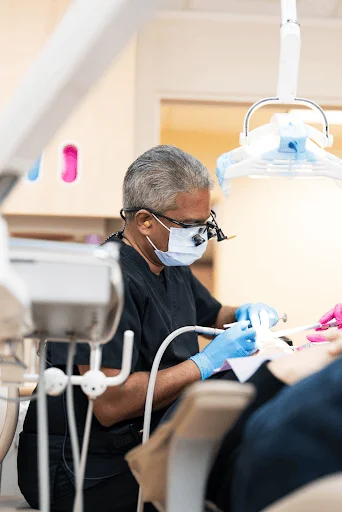
Routine dental cleanings help remove plaque and tartar before bacteria damage the gums and bone supporting the teeth. Early detection of gingivitis, deep cleaning below the gumline, and personalized oral hygiene advice all help lower the risk of long-term gum disease and tooth loss while keeping the mouth healthier overall.
Key Takeaways
- Plaque hardens into tartar that brushing cannot remove.
- Gingivitis often starts quietly with bleeding or swollen gums.
- Regular cleanings help protect gum tissue and supporting bone.
Most people think gum disease starts with pain. That would make things easier, honestly. Pain gets attention. Gum disease usually does not work like that. It begins quietly. A little blood in the sink after brushing. Gums that look puffier than usual. Breath that never feels fully fresh, no matter what gets used at home.
A lot of people shrug those things off for months. Some wait years.
Professional dental cleaning helps stop that cycle before the gums and bone start breaking down. Daily brushing matters, obviously, but it cannot fully clean every tight corner around the teeth. Once plaque remains trapped near the gums long enough, bacteria settle in and irritation begins to build beneath the surface.
Many patients hear the word gingivitis and assume it means a serious infection already exists. That is not always true. Gingivitis often starts as mild inflammation. The tricky part is how normal it can seem at first. Gums bleed a little for one week, then appear fine again the next. People tend to ignore problems that come and go.
The Plaque to Tartar Pipeline
Plaque never really stops forming. Even after brushing, a thin bacterial film starts to build up again throughout the day. Most of it is removed during regular home care, though small areas usually remain behind the back teeth or near the gumline.
After enough time passes, plaque hardens into calculus. Some people still call it tartar because that term feels more familiar. Either way, once it hardens, brushing can no longer scrape it off. No toothpaste fixes that. A hygienist has to remove it professionally.
That hardened buildup creates another problem people rarely think about. Its rough texture gives fresh bacteria more places to attach.
Then the cycle keeps feeding itself:
- Plaque thickens around the gums
- Bacteria spread deeper below the surface
- Gum tissue becomes irritated
- Small pockets begin forming near the roots
At first, the damage seems minor. Maybe slight swelling. Maybe bleeding during flossing. Still, bacteria inside those pockets keep growing every day the buildup stays there.
Identifying Gingivitis Early
Early gum disease can look surprisingly harmless. Some gums bleed heavily. Others barely show signs at all. That inconsistency fools people into thinking the problem fixed itself.
During a cleaning appointment, hygienists look for details that patients usually miss at home. Changes in gum color. Swelling between teeth. Bleeding points around the gumline. Areas where the tissue starts pulling away from the tooth surface.
Here are a few warning signs dentists watch closely:
| Sign | Possible Meaning |
| Bleeding during flossing | Gum inflammation |
| Persistent bad breath | Bacterial buildup |
| Gum tenderness | Irritated tissue |
| Receding gums | Early gum damage |
The encouraging part is this. Gingivitis can often improve before permanent damage develops. Once infection reaches the supporting bone around teeth, treatment becomes far more involved.
That shift happens slowly, which is probably why so many people underestimate gum disease until their teeth begin feeling loose.
Removing Bacteria from Gum Pockets
Sounds like a scale is uncomfortable when patients first hear the term. The actual goal stays pretty straightforward, though. Remove harmful buildup before bacteria spread deeper under the gums.
During scaling, hygienists clean hardened deposits from above and below the gumline. Some areas need more attention than others, especially near deeper pockets where bacteria collect for long periods without interruption.
Most patients cannot reach those spaces at home, no matter how carefully they brush.
As bacteria remain trapped beneath the gums, they begin to irritate the tissue surrounding the roots. Over time, inflammation reaches the bone holding the teeth in place. That part worries dentists the most because bone does not simply grow back once large amounts are lost.
After a proper cleaning, many patients notice less bleeding within days. Their gums feel calmer. Breathing improves too. Sometimes people realize afterward that their mouth had been irritated for months without fully noticing it.
Polishing for Prevention
Polishing is usually treated as the cosmetic part of a cleaning visit. Teeth feel smoother afterward, so people naturally focus on how clean everything feels. There is more happening than appearance alone, though.
Smooth tooth surfaces make plaque attachment more difficult in the following weeks. Bacteria adhere more readily to rough areas, especially near tartar deposits or uneven enamel surfaces.
That smoother finish helps slow new buildup from collecting quite as quickly.
Some patients even brush more carefully after a cleaning because their teeth feel noticeably different. Cleaner surfaces tend to make people more aware of their oral habits again. Strange, maybe, but it happens often enough that hygienists notice.
Small preventive steps usually matter more than dramatic treatments later.
Personalized Oral Hygiene Tips
Every mouth traps plaque differently. One patient struggles with crowded lower teeth. Another constant builds up behind the molars. Some patients clean well overall but repeatedly miss the gumline without realizing it.
That is why personalized advice matters after a cleaning.
A hygienist may recommend:
- Different flossing methods
- Softer toothbrush bristles
- Better brushing angles near the gums
- Extra attention around crowns or bridges
Simple adjustments tend to work better than overly complicated routines that people abandon after a week.
Regular cleanings also help dentists compare gum health over time. Small changes become easier to catch early before larger problems develop beneath the surface. That ongoing monitoring protects not only the teeth but the bone supporting them.
At Samuel Dental Care, we see how quickly untreated gum problems can turn into long-term damage. We take the time to explain what is happening inside the mouth rather than rushing patients through appointments. Our team focuses on thorough dental cleaning, early detection of gum disease, and personalized treatment plans that help patients maintain healthy smiles for years. If bleeding gums, tartar buildup, or bad breath have become routine, we are here to help before those problems become harder to treat.


